Cut Like a Pro: Learn to Improve Your Knife Skills Step by Step

Cut Like a Pro: Learn to Improve Your Knife Skills Step by Step
A sharp knife and the right technique can turn cooking from a chore into a craft. Whether you’re chopping onions, slicing meat, or dicing vegetables, knife work isn’t about brute force—it’s about precision, rhythm, and control. With a few simple principles, you can become faster, safer, and more confident in the kitchen. Here’s a step-by-step guide to help you sharpen your skills—literally and figuratively.
Choose the Right Knife for the Job
The first step toward better knife skills is using the right tool. Many home cooks try to do everything with one knife, but different tasks call for different blades.
- Chef’s knife – your all-purpose workhorse, perfect for chopping vegetables, slicing meat, and mincing herbs.
- Paring knife – small and nimble, ideal for peeling, trimming, or cutting fruit.
- Serrated knife – great for slicing bread, tomatoes, and other foods with tough exteriors and soft interiors.
- Boning or fillet knife – thin and flexible, designed for precision when working with fish or meat.
Invest in a few high-quality knives that feel comfortable in your hand. A knife that fits well gives you better control and reduces the risk of accidents.
Læs også:
Keep Your Knives Sharp
A dull knife is more dangerous than a sharp one. When you have to push harder to cut, you’re more likely to slip. Regular maintenance keeps your knives performing their best.
- Hone your knife with a honing steel a few times a week to realign the edge.
- Sharpen it with a whetstone or have it professionally sharpened when it starts to drag through food.
- Store knives properly—on a magnetic strip or in a knife block—to protect the edge.
A sharp knife makes cutting smoother, faster, and far more satisfying.
Learn the Proper Grip
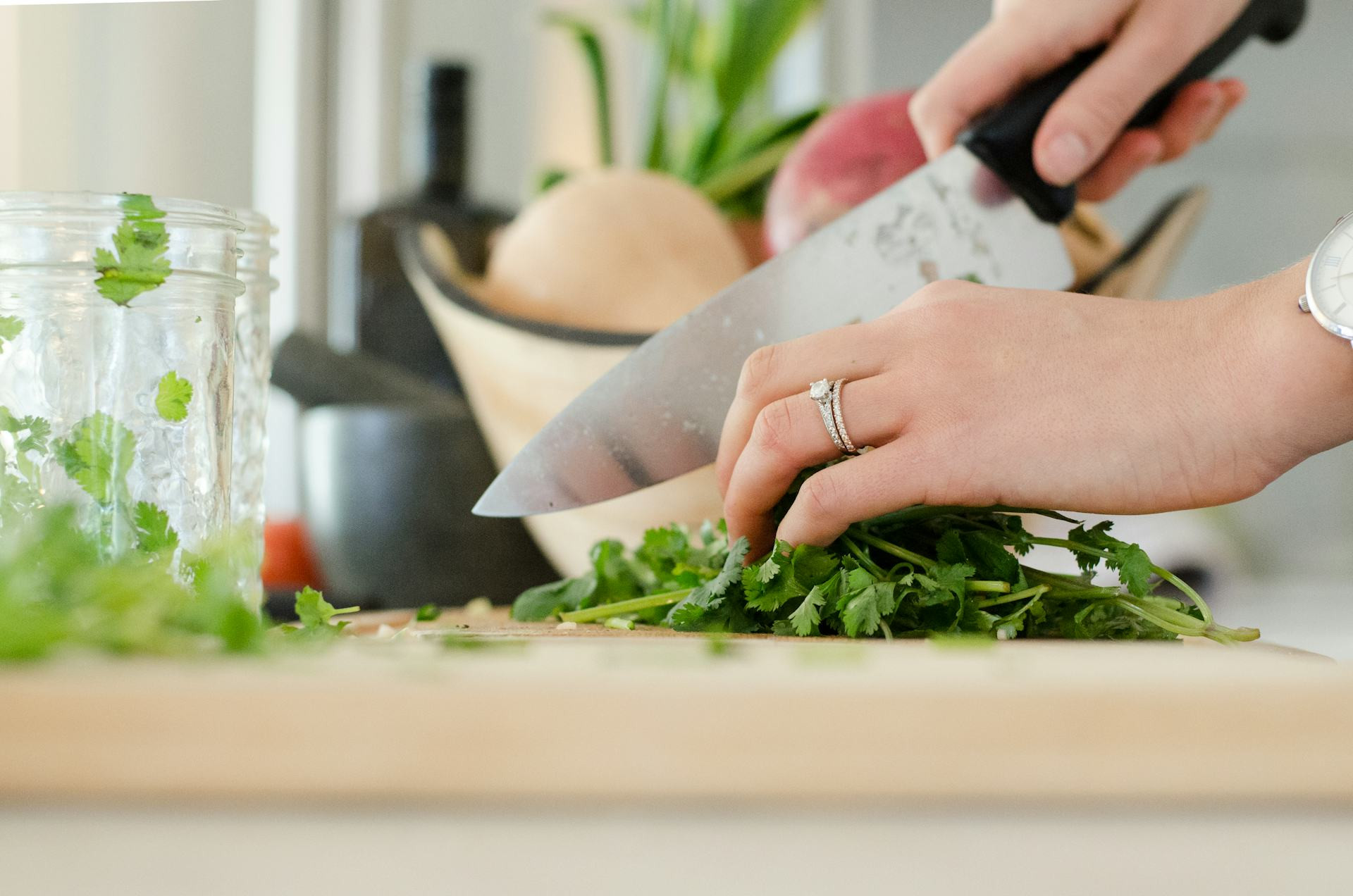
How you hold your knife affects both safety and precision. The most stable and professional method is the pinch grip:
- Pinch the blade where it meets the handle with your thumb and index finger.
- Wrap your remaining fingers around the handle for support.
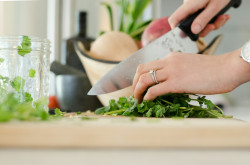
- Use your other hand to hold the food, curling your fingertips inward so your knuckles guide the blade.
This grip gives you maximum control and keeps your fingers safely out of harm’s way.
Practice the Basic Cuts
Once you’ve mastered the grip, it’s time to practice the fundamental cuts. Start with vegetables—they’re inexpensive and forgiving.
- Chop – quick, rhythmic motions where the knife stays in contact with the board. Great for herbs, onions, and garlic.
- Slice – long, smooth strokes for even pieces of vegetables or meat.
- Julienne – thin matchstick strips, perfect for salads or stir-fries.
- Dice – uniform cubes that cook evenly and look professional.
Consistency is key. The more uniform your cuts, the better your dishes will cook and look.
Create a Safe Workspace
A stable surface and good posture make all the difference. Place a damp paper towel or kitchen cloth under your cutting board to keep it from sliding. Stand with your feet shoulder-width apart, knees slightly bent, and shoulders relaxed.
Always keep track of where your knife’s tip is, and never let it hang off the counter. When transferring chopped ingredients, use the back of the knife or a bench scraper—not the sharp edge.
Practice Makes Perfect
Like any skill, knife work improves with repetition. Start slowly and focus on accuracy before speed. As your movements become more natural, your pace will increase on its own.
A great exercise is to practice with one ingredient—say, an onion—and cut it in different ways. You’ll gain confidence and learn how different cuts affect texture and cooking time.
Make Knife Work Part of the Joy of Cooking
Improving your knife skills isn’t just about efficiency—it’s about enjoying the process. When you work calmly and deliberately, cooking becomes a form of craftsmanship. You’ll start to feel the rhythm of each slice and the satisfaction of clean, even cuts.
Over time, you’ll notice your dishes not only look more professional but also taste better, thanks to evenly cut ingredients that cook perfectly. That’s the difference between cooking like an amateur and cutting like a pro.
Læs også: